

 17 Feb, 2026
How a Hair Loss Calculator Gives You the Clarity to Finally Act — Enhanced Med Clinics
Most people notice hair loss the same way — slowly, then all at once. A slightly wider parting one morning. A hairline that seems to have shifted overnight. A shower drain that tells a story nobody wanted to hear. By the time it becomes impossible to ignore, many people have already spent months second-guessing whether what they are seeing is real, significant, or something worth addressing at all.
That uncertainty is one of the most frustrating parts of experiencing hair loss. And it is precisely the problem a hair loss calculator is designed to solve.
At Enhanced Med Clinics, we believe that informed patients make better decisions. Understanding exactly where you stand on a medically recognised hair loss scale does not just give you a number — it gives you a starting point, a language for your situation, and a map toward the right solution.
What Is a Hair Loss Calculator and How Does It Work?
A hair loss calculator is a clinical assessment tool — digital or in-person — that maps your current pattern of thinning or loss against established medical classification systems. Rather than relying on your own subjective impression of 'a bit thin on top,' it places your situation within a structured framework that clinicians worldwide use to communicate, diagnose, and plan treatment.
The two most widely used classification systems are the Norwood Scale, which applies primarily to male pattern hair loss, and the Ludwig Scale, which is designed for female diffuse thinning. A well-built hair loss calculator takes inputs about your hairline, crown density, temple recession, and overall distribution of thinning, and outputs a stage designation that corresponds to one of these scales. That single output carries a remarkable amount of clinical meaning.
The Norwood Scale: Understanding Male Hair Loss Stages
The Norwood Scale runs from Stage 1 through Stage 7, with each step representing a progressively greater degree of hairline recession and crown thinning. Stage 1 describes a hairline that is essentially unchanged from adolescence — no clinical loss. By Stage 3, recession at the temples is clearly visible. Stage 4 brings meaningful crown thinning alongside the recession. Stages 5, 6 and 7 describe the progressive merging of these two zones, until only a horseshoe-shaped band of hair remains along the back and sides of the scalp.
Why does knowing your Norwood stage matter practically? Because treatment options — their feasibility, complexity, expected graft count, and likely outcome — are directly tied to stage. A Stage 2 patient has very different options from a Stage 5 patient. A hair loss calculator that accurately places you on this scale removes the guesswork from that conversation entirely.
The Ludwig Scale: How Female Hair Loss Is Classified
Female pattern hair loss presents very differently from the male version, which is why it has its own classification system. The Ludwig Scale operates across three grades. Grade 1 describes mild thinning across the crown and top of the scalp, with the frontal hairline remaining largely intact. Grade 2 represents wider, more visible thinning — the parting broadens noticeably and density reduces across a larger area. Grade 3 marks severe diffuse thinning where the scalp becomes visible through the hair across most of the top, though the frontal hairline may still hold its position.
Women often find their hair loss more emotionally distressing than men do, in part because it is less socially acknowledged and because the diffuse pattern makes it harder to pinpoint. Knowing your Ludwig grade gives that diffuse experience a clinical name — and that naming is the first step toward targeted action.
|
|
What Your Hair Loss Stage Actually Tells You
Early Stages: The Window of Maximum Opportunity
Stages 1 through 3 on the Norwood Scale, and Grade 1 on the Ludwig Scale, represent the period when medical intervention has the broadest range of options and the clearest outcomes. Non-surgical approaches — topical treatments, oral medications, PRP therapy, and nutritional protocols — have the strongest evidence base at early stages. Acting during this window does not just slow progression; in many cases it genuinely reverses visible thinning and restores functional density.
Mid Stages: When Surgical Options Enter the Conversation
From Norwood Stage 4 onward, and Ludwig Grade 2 and above, the picture becomes more nuanced. Medical management remains valuable for stabilising the non-transplanted hair, but surgical restoration now becomes a realistic and often transformational option. A hair loss calculator that places you in this range is telling you something important: the window for purely medical management is narrowing, and a specialist consultation now carries genuine urgency.
Advanced Stages: Strategic Planning Over Single Solutions
Advanced hair loss — Norwood Stage 6 or 7, Ludwig Grade 3 — requires a planned, strategic approach. Donor supply becomes a critical variable, and session planning matters enormously. At Enhanced Med Clinics, we approach advanced cases through detailed mapping of what the donor zone can realistically deliver, what density is achievable across multiple sessions, and how to sequence treatment to produce the best cumulative result over time. The calculator identifies the stage; our specialists build the roadmap.
|
|
Hair Loss Calculator — Frequently Asked Questions
These are the questions patients ask us most often when they first engage with hair loss staging tools.
Q: Is losing 50 to 100 hairs a day actually normal?
A: Yes — within that range, daily shedding is entirely within the bounds of a normal hair growth cycle. Each follicle moves independently through phases of growth, transition, and rest, and shed hairs in the resting phase are replaced by new ones beginning their growth cycle. The number to pay attention to is not the absolute count of shed hairs but whether you are noticing a reduction in overall density, a widening parting, or areas where regrowth is visibly slower or absent. Those are the signals that warrant a closer look.
Q: Can a hair loss calculator work for both men and women?
A: A well-designed calculator should accommodate both, but the underlying classification systems differ. Male pattern loss is assessed against the Norwood Scale, which tracks hairline recession and crown thinning as distinct and measurable zones. Female pattern loss uses the Ludwig Scale, which focuses on diffuse thinning across the central scalp. Some calculators merge these into a single interface with branching logic based on sex; others address them separately. At Enhanced Med Clinics, our assessment process is fully gender-inclusive and applies whichever classification framework is clinically appropriate for each individual.
Q: What if the calculator places me at an early stage but I feel my loss is significant?
A: This is more common than people expect, and it reflects a real limitation of any scale-based tool used without clinical context. Hair loss calculators assess visible pattern and distribution — they cannot measure follicle miniaturisation that has not yet produced visible thinning, or the rate at which your loss is progressing. Someone at Norwood Stage 2 who has moved from Stage 1 to Stage 2 within eighteen months is in a very different situation from someone who has been stable at Stage 2 for a decade. If your subjective experience feels more significant than your stage suggests, trust that instinct and get a clinical assessment. Your perception is data.
Q: How accurate are online hair loss calculators compared to a clinical assessment?
A: Online calculators serve a genuinely useful orientation function — they introduce you to the language of hair loss staging and give you a preliminary framework for your situation. Their limitation is that they rely on self-reported inputs and photographs taken in variable lighting conditions, which makes precise staging difficult. A clinical assessment conducted by a trained specialist with appropriate lighting, magnification tools, and scalp analysis equipment is measurably more accurate and captures factors — scalp health, follicle density, donor zone quality — that no digital tool currently replicates.
Q: Does knowing my Norwood or Ludwig stage mean I need surgery?
A: Not at all. Stage designation is a descriptor, not a prescription. Early and mid-stage classifications frequently respond well to non-surgical interventions, and many patients achieve excellent outcomes without ever proceeding to a transplant procedure. What the stage does is inform the conversation about which options are appropriate and most likely to deliver meaningful results given where your hair loss currently stands. The goal of staging is to open the right doors — not to push you through any particular one.
Q: How often should I reassess my hair loss stage?
A: If you are actively treating hair loss — whether medically or surgically — an annual assessment provides a useful baseline for measuring whether your current approach is maintaining stability or producing improvement. If you are not yet treating but are monitoring, a reassessment every six to twelve months helps track the rate of progression, which is itself a clinically meaningful data point. Rapid progression over a short period is a strong signal to act sooner rather than later.
Q: What happens after I find out my hair loss stage at Enhanced Med Clinics?
A: Your stage is the beginning of the conversation, not the end of it. Once we have established where you are on the scale, our specialists discuss the contributing factors — whether your loss is genetic, hormonal, nutritional, or stress-related — and what that means for the treatment options best suited to your situation. You leave with a clear clinical picture, a realistic set of options with honest expected outcomes, and absolutely no obligation to proceed with anything on the day. We believe that informed patients make better decisions, and that is the standard we hold ourselves to.
Your Next Step Starts With Knowing
Hair loss has a way of existing in a fog — noticed but not named, worrying but undefined. A hair loss calculator cuts through that fog. It gives your experience a clinical framework, your stage a clear identity, and your options a concrete starting point. Whether you are at the very beginning of a thinning journey or have been managing it for years without a clear direction, knowing your stage changes the nature of the conversation you can have about treatment.
At Enhanced Med Clinics, we have built our practice around that kind of clarity. When you know what you are dealing with, we can tell you exactly what we can do about it.

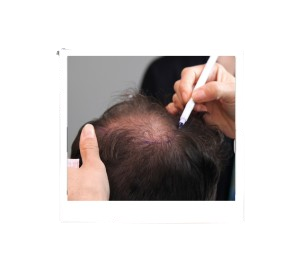


If you’re ready to achieve incredible, natural hair growth, don’t wait! Join the thousands of satisfied patients who have trusted Enhanced Med Clinics for their hair transplant in India. Book your consultation today to begin your journey towards a more confident you.
Book An Appointment